How Do Thrust Vectoring Systems Work in Fighter Jets Like the F-22?
Modern fighter jets are designed to perform maneuvers that seem almost impossible according to normal aerodynamics. Aircraft like the F-22 Raptor can rapidly pitch upward, perform post-stall maneuvers, and maintain control even when traditional aerodynamic surfaces lose effectiveness.
One of the main technologies enabling this is:
- Thrust Vectoring
What Is Thrust Vectoring?
Normally, jet engines push exhaust gases straight backward to create forward thrust.
In thrust vectoring systems:
- The engine nozzle can move
- The exhaust flow direction changes
- The aircraft gains additional control forces
Newton’s Third Law Behind Thrust Vectoring
Jet propulsion follows Newton’s Third Law:
Where:
- F = Thrust force
- ṁ = Mass flow rate
- Ve = Exhaust velocity
- V0 = Aircraft velocity
When the exhaust direction changes, the resulting thrust vector changes direction too.
Why Fighter Jets Need Thrust Vectoring
Traditional aircraft control depends on airflow over:
- Elevators
- Ailerons
- Rudders
But during:
- Very low speed
- High angle-of-attack flight
- Post-stall maneuvers
These surfaces become less effective because airflow separates from the wings.
How the F-22 Thrust Vectoring System Works
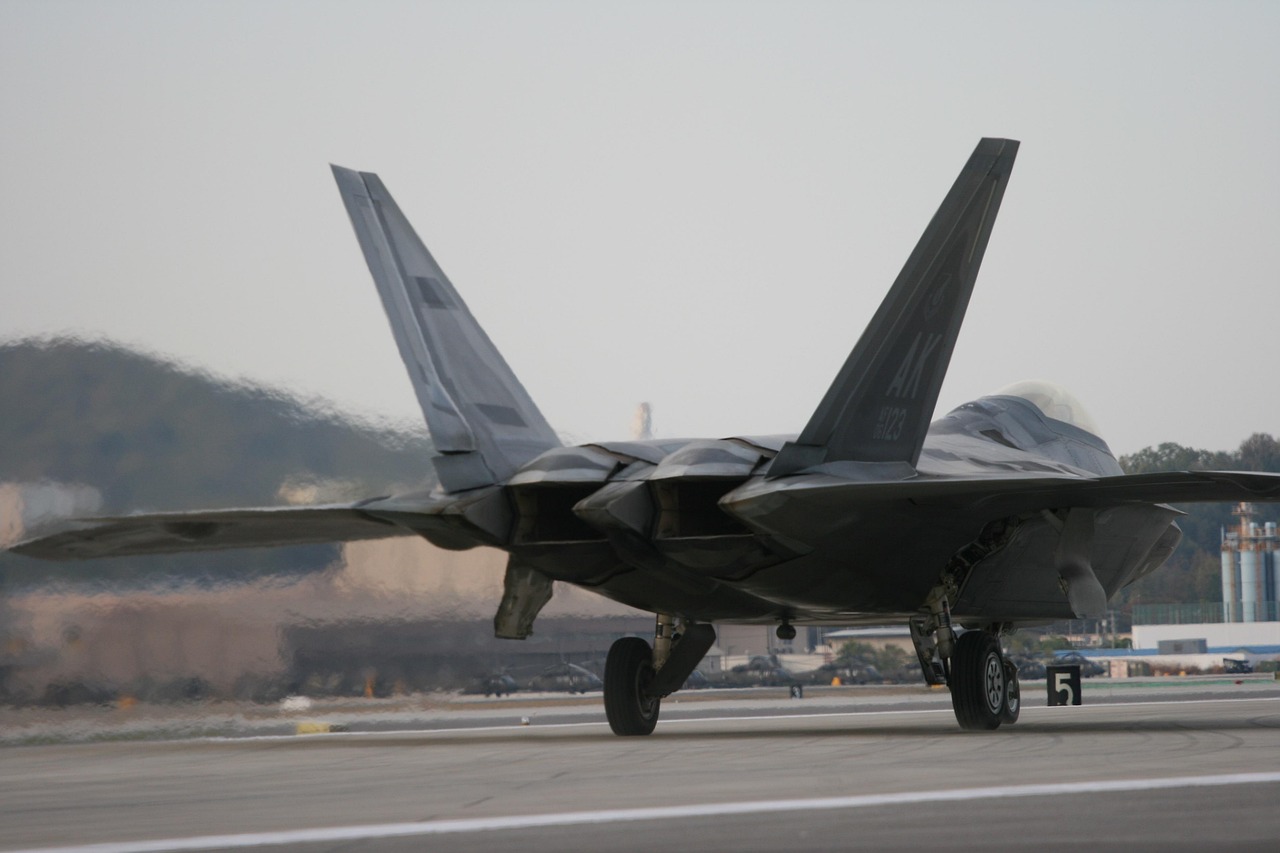
The F-22 Raptor uses:
- Two-dimensional thrust vectoring nozzles
Its Pratt & Whitney F119 engines have rectangular exhaust nozzles capable of moving:
- Up and down by approximately 20 degrees
How the Nozzles Move
The exhaust nozzle contains:
- Movable flaps
- Hydraulic actuators
- Heat-resistant structures
These components redirect the engine exhaust flow during flight.
Pitch Control Through Vectoring
When both nozzles deflect upward:
- The exhaust pushes downward
- The aircraft nose pitches upward
When both nozzles deflect downward:
- The nose pitches downward
What Makes the F-22 So Maneuverable?
The F-22 combines:
- Stealth design
- High thrust-to-weight ratio
- Advanced flight computers
- Thrust vectoring
Together, these allow:
- Extreme angle-of-attack flight
- Rapid directional changes
- Post-stall maneuverability
What Are Post-Stall Maneuvers?
Post-stall maneuvers occur when:
- The aircraft exceeds normal aerodynamic stall angles
Examples include:
- Cobra maneuver
- J-turn
- Herbst maneuver
How Flight Computers Control Thrust Vectoring
The pilot does not manually operate the vectoring nozzles.
Instead:
- Flight computers automatically coordinate nozzle movement
- The system integrates with fly-by-wire controls
2D vs 3D Thrust Vectoring
The F-22 uses:
- 2D thrust vectoring
This means:
- The nozzles move only vertically
Some Russian fighters like the:
- Su-35
- Su-57
Use:
- 3D thrust vectoring
allowing nozzle movement in multiple axes.
Why Rectangular Nozzles Matter
The F-22’s rectangular nozzles help:
- Reduce radar signature
- Lower infrared signature
- Improve stealth from rear angles
Thrust Vectoring and Dogfighting
Thrust vectoring provides major advantages in:
- Close-range air combat
- Low-speed maneuvering
- Rapid nose pointing
This allows pilots to:
- Point weapons faster
- Recover from extreme maneuvers
- Outmaneuver opponents
Why Not Every Fighter Uses Thrust Vectoring
Thrust vectoring systems add:
- Weight
- Complexity
- Maintenance requirements
- Higher costs
Modern combat also increasingly emphasizes:
- Stealth
- Long-range missiles
- Sensor superiority
Engineering Challenges
Thrust vectoring nozzles face enormous engineering stresses:
- Extreme temperatures
- High vibration
- Supersonic exhaust flow
- Thermal expansion
Future of Thrust Vectoring
Future fighter aircraft may use:
- Adaptive cycle engines
- AI-assisted flight control
- Advanced 3D vectoring
- Plasma flow control
Conclusion
Thrust vectoring systems allow advanced fighters like the F-22 Raptor to achieve extraordinary maneuverability by redirecting engine exhaust itself. Through movable nozzles, advanced flight computers, and powerful engines, the aircraft maintains control even in extreme post-stall conditions where traditional aerodynamics become ineffective.
Combined with stealth, supercruise, and advanced avionics, thrust vectoring gives the F-22 one of the most impressive maneuvering capabilities ever seen in a combat aircraft.


