In aerospace engineering, the airfoil is the fundamental shape that allows an aircraft to generate lift and achieve controlled flight. Every airplane wing, helicopter blade, or turbine fan is built around the principles of airfoil geometry — a precise balance of curves, angles, and dimensions that manipulate airflow efficiently.
1. What Is an Airfoil?
An airfoil is a two-dimensional cross-section of a wing or blade designed to produce a desired aerodynamic force when placed in a moving air stream. Its geometry governs how air moves around it, thereby influencing lift, drag, and moment characteristics.
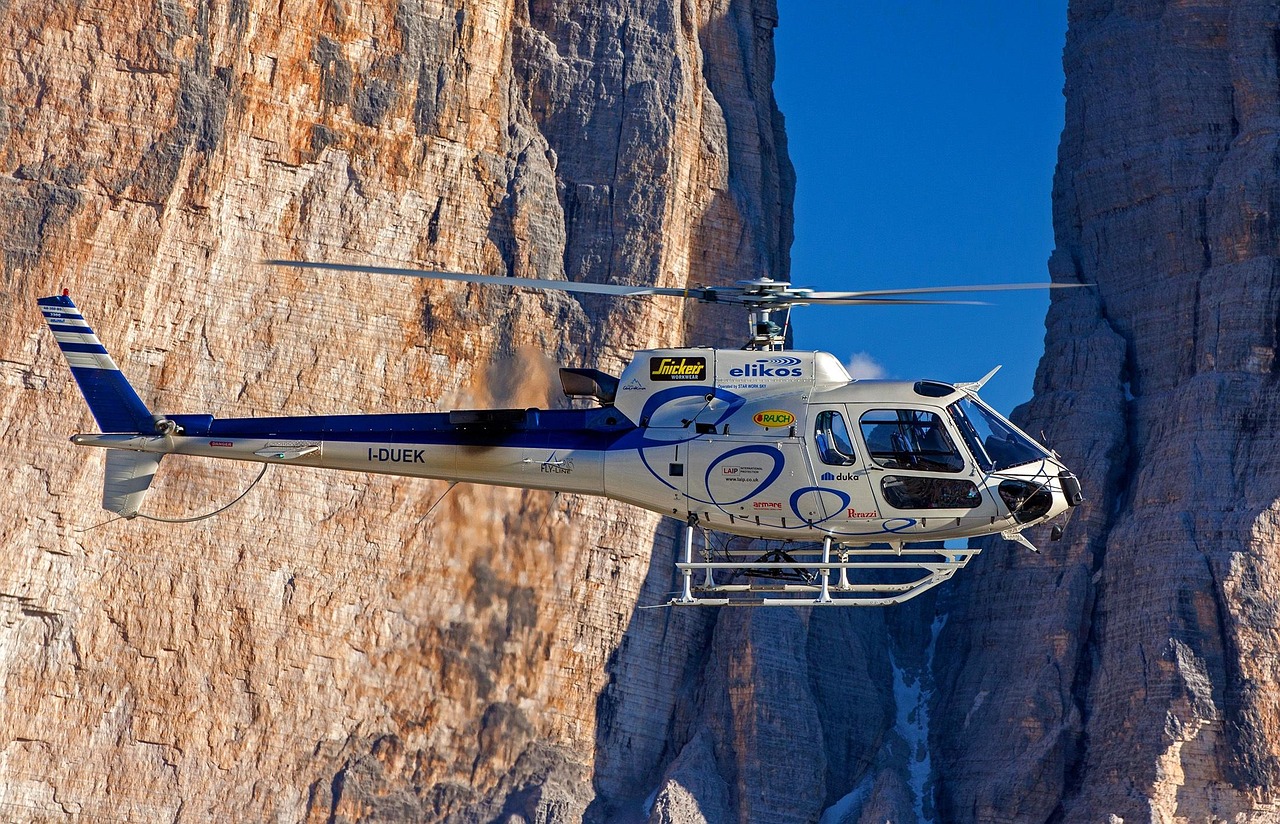 |
| The Geometry of Airfoils: Where Lift Begins |
In simpler terms, an airfoil is not just a curve — it’s an engineered contour optimized through fluid mechanics and experimental data to ensure the best performance at various Reynolds numbers and Mach regimes.
2. Key Geometric Parameters of an Airfoil
- Chord Line (c):
The straight line joining the leading edge and trailing edge of the airfoil. It serves as a reference axis for defining other geometric and aerodynamic properties. - Camber Line:
The locus of points halfway between the upper and lower surfaces. It represents the airfoil’s curvature. - Positively cambered airfoils generate lift even at zero angle of attack.
- Symmetrical airfoils (no camber) are often used in aerobatic and supersonic aircraft where equal performance in both directions is required.
- Maximum Camber (f):
The greatest distance between the camber line and the chord line, typically expressed as a percentage of the chord (e.g., 2%–5%). It affects lift and pitching moment. - Maximum Thickness (t):
The largest distance between upper and lower surfaces, also given as a percentage of chord. Thickness influences structural strength and affects drag characteristics. - Leading Edge Radius (rₗₑ):
The curvature radius at the nose of the airfoil, critical for controlling flow separation and stall behavior.
3. Classification of Airfoils
Airfoils are classified according to their shape, symmetry, and operating regime:
- Symmetrical Airfoils: Equal upper and lower surfaces, zero camber; used in control surfaces and supersonic wings.
- Cambered Airfoils: Unequal curvature; higher lift at low speeds. Common in subsonic aircraft.
- Supercritical Airfoils: Flattened upper surface with a pronounced aft camber; designed to delay shock formation in transonic flight.
- Thin Airfoils: Used in high-speed applications where wave drag dominates.
4. The Aerodynamic Significance of Geometry
The geometry of an airfoil directly determines the pressure distribution around it. According to Bernoulli’s principle and circulation theory, lift is created when the flow velocity over the upper surface exceeds that of the lower surface, resulting in a pressure difference.
A small change in camber, thickness, or leading-edge radius can alter:
- The center of pressure location,
- The stall angle,
- And the lift-to-drag ratio (L/D) — the ultimate measure of aerodynamic efficiency.
For instance, the NACA 2412 airfoil (used in Cessna 172) has a 2% maximum camber located at 40% chord and 12% thickness, offering excellent low-speed lift characteristics.
5. Computational and Experimental Optimization
Modern aerospace design employs Computational Fluid Dynamics (CFD) and wind tunnel testing to analyze airfoil performance under various flow conditions. Engineers iteratively modify geometry to achieve optimal lift, reduced drag, and minimal structural stress.
Advanced algorithms even use machine learning to evolve airfoil shapes automatically based on mission profiles — a significant step beyond the classic NACA series.
6. Conclusion: Geometry Is the Genesis of Flight
Every aircraft that has ever flown — from the Wright Flyer to the F-22 Raptor — owes its flight capability to the precise geometry of its airfoils. The beauty of flight begins here, in the controlled manipulation of airflow by shape.


0 Comments